

For those who love to create something unique in jewelry, build crystal DIY Crafts or simply want to use natural crystals for healing, it is too frustrating to search 100% natural crystals. Market is full of synthetic stones, imitated or dyed glass. The vague product descriptions on crystal site will expose nothing about the origin of crystals or stones.
Folkmarket understands this frustrations and provides the best platform to source 100% authentic and natural crystals for crafts. We have been sourcing stones around the world such as Brazil, Africa, Pakistan, Afghanistan and many others — and we've built our entire crystal supply range around one idea: you deserve to know exactly what you're working with.
This guide will guide you about everything — from understanding what raw crystals actually are, to choosing the right ones for your project or healing practices. It also helps you to spot red flags before you buy.
What Are Natural Raw Crystals?
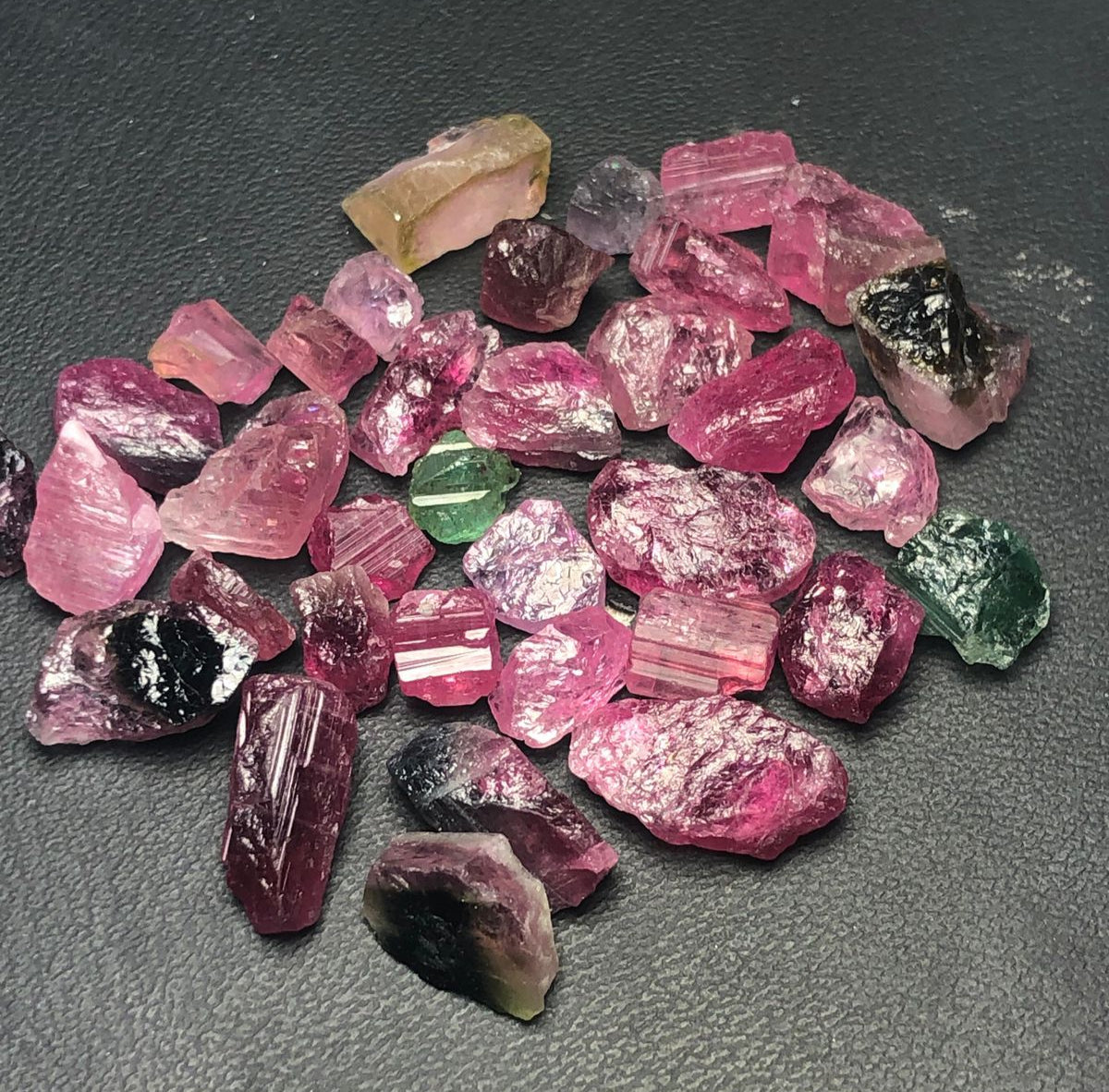
Raw crystals — are natural stones which comes in their original exactly as they emerge from the earth. Raw or rough crystals are in uncut and unpolished state. Unlike polished gemstones, raw crystals holds their surface texture naturally and have natural colour gradients. They will be having mineral inclusions.
For handmade craft creators, raw crystals can give many ideas which something polished stones can't: authentic and original character. As no two raw crystals are came always. That imperfection and for their being unique in characteristics, is exactly what makes handmade raw crystal jewelry, wrapping crafts, and macramé designs prominent.
For those who are engaged in meditation and healing, uncut crystals hold more energy if they are in their original structure than any processed stone — making them the perfect choice for crystal healing pendants, crystal grids, reiki, and other meditation use.
What Makes a Raw Crystal Good for Craft Making?
All raw stones are unique and very rough crystal may not work equally well for every type of craft. Here are some guidelines before making purchases:-
1. Shape and Structure
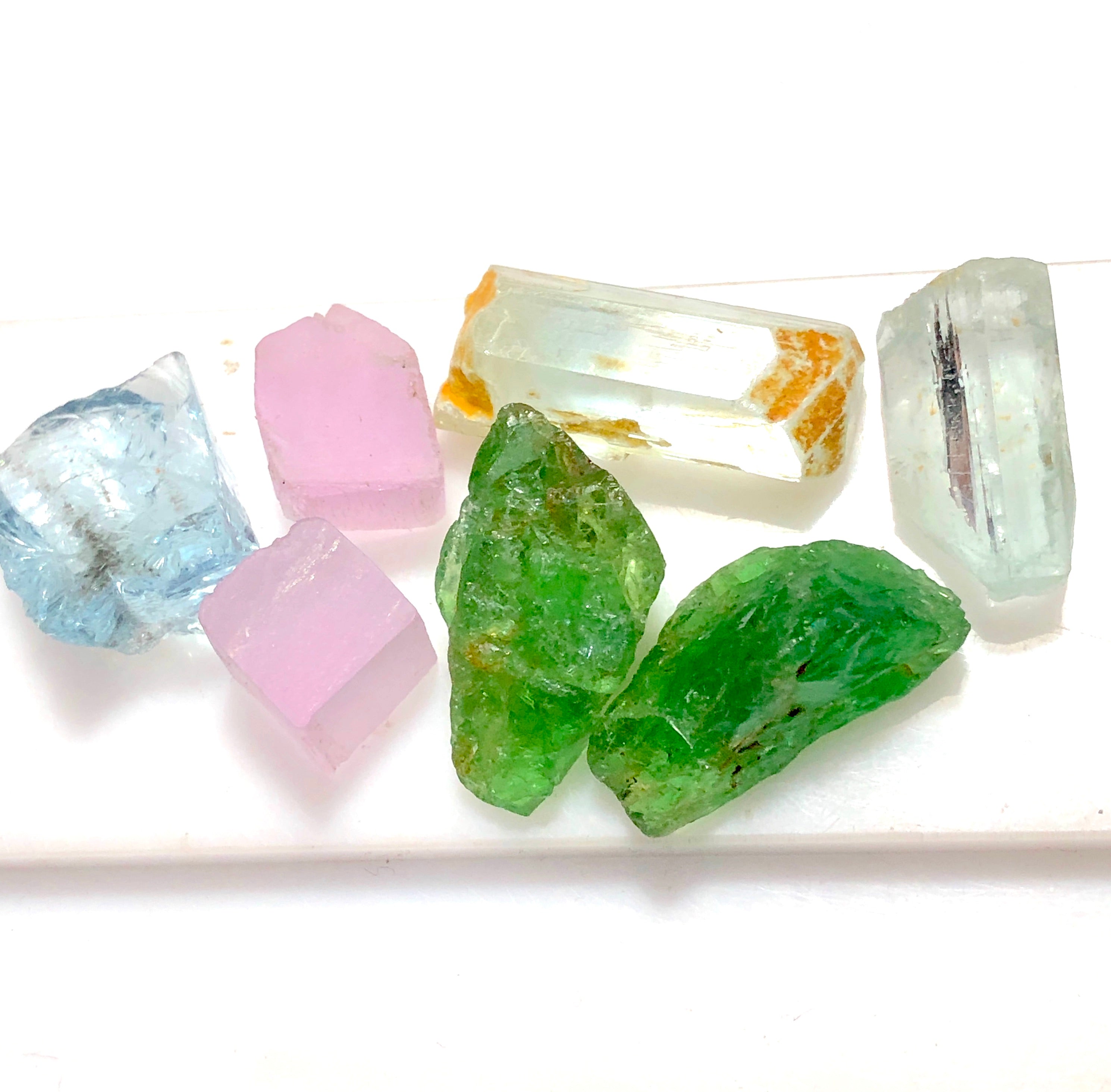
For wire wrapping and crystal pendant making, one may buy natural point or flat faced crystals. Quartz and Amethyst points, raw tourmaline rods, and rough emeralds and aquamarine hexagonal shapes all work beautifully. For making crystal grids, stone with clusters and larger irregular pieces create visual impact.
2. Size and Weight
Always check the size in millimetres (mm) and weight in carats or grams. Photography of stones can be misleading — a crystal that looks large in a photo may weigh only 3–5 grams. It is advised to read product description thoroughly especially in case of sizzes. At Folkmarket, every crystal includes exact weight and it is mentioned clearly in the product description so you know what you're ordering.
3. Surface Quality
Some rough stones come with natural strong lustre and shining — ideal for creating and fixing them in wire wraps. Some stones may have a more rough and matte surface. Such raw crystals are better for tumbling or making cabochon. When buying crystals online, always look close-up photos of the actual stone, not stock imagery.
4. Colour Consistency
Color consistency is equally matter for some matched sets projects — earring pairs, batch necklaces. Folkmarket's parcels are sorted by colour range so you can build matched collections without individual stone hunting.
The Best Raw Crystals for Handmade Crafts and Healing
Here are a few examples of raw crystals that crafters reach Folkmarket for most — with both handmade items use and healing properties.
|
Raw Crystal |
Best Craft Uses |
Healing Properties |
|
Rough Amethyst |
Wire wrapping, pendant making, crystal grids |
Calm, stress relief, clarity, spiritual focus |
|
Raw Rose Quartz |
Love-themed jewelry, macramé accents, gift sets |
Love, compassion, emotional healing, self-worth |
|
Raw Black Tourmaline |
Protection grids, statement pendants, resin art |
Grounding, protection, cleansing, mental clarity |
|
Rough Clear Quartz |
Crystal grids, wire wrapping, amplifier stones |
Clarity, energy amplification, spiritual growth |
|
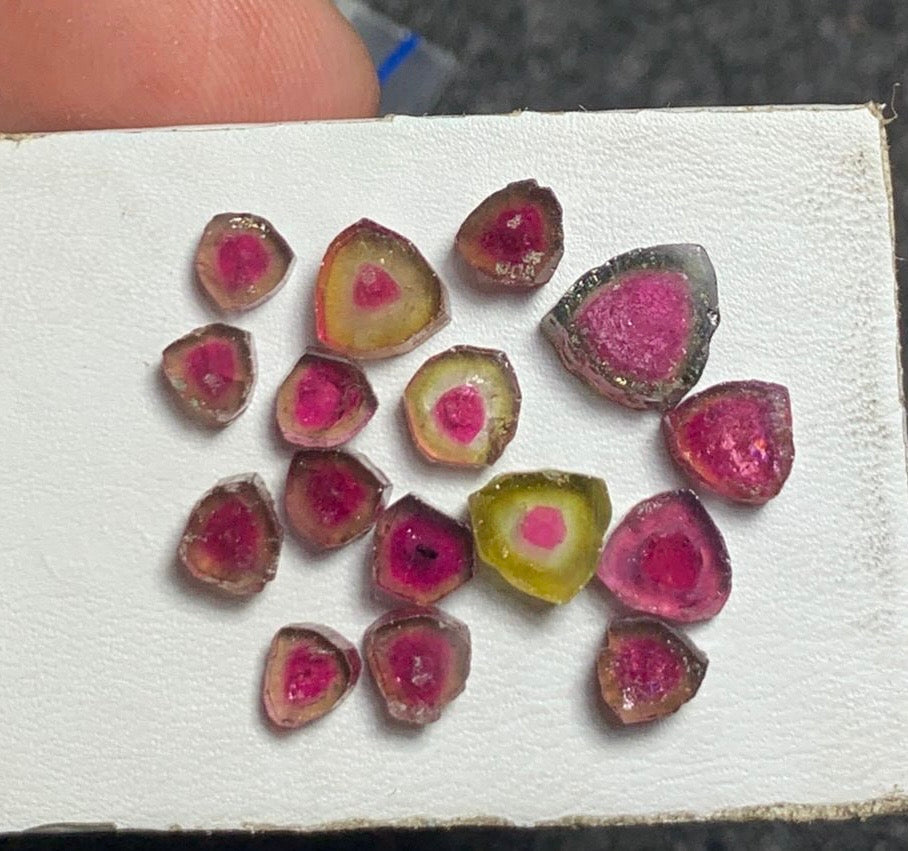
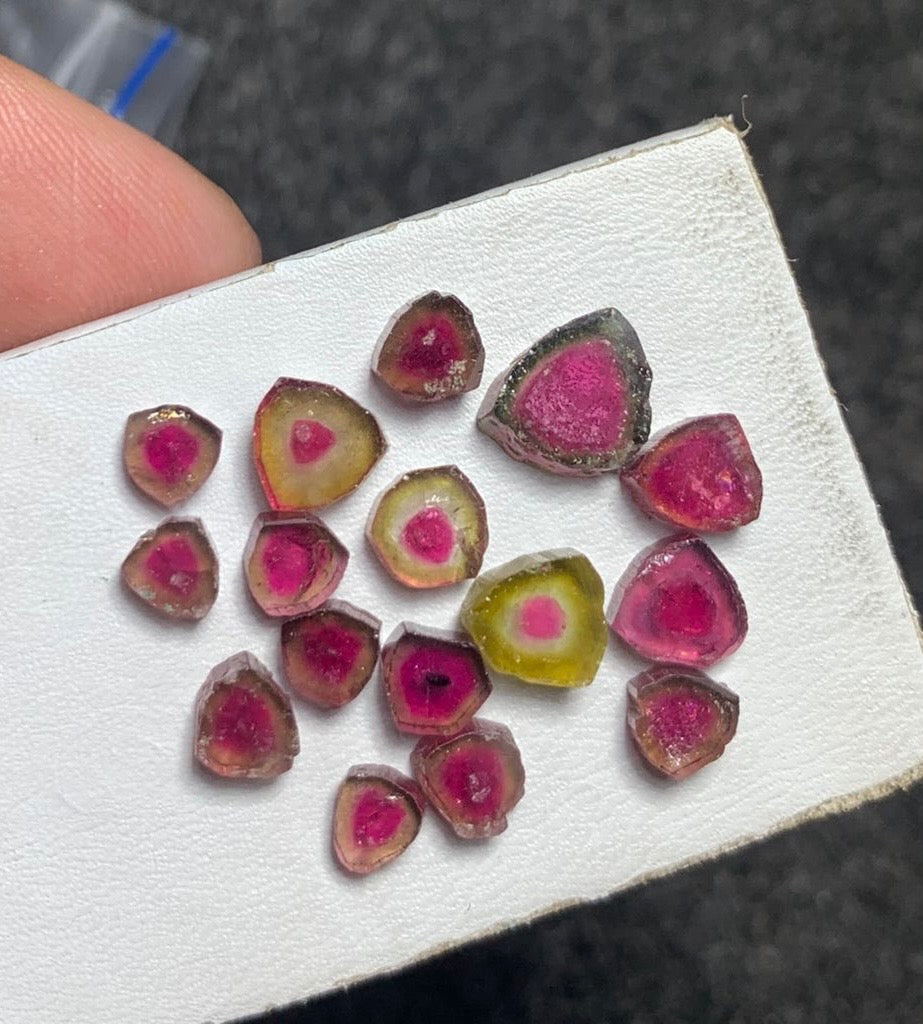
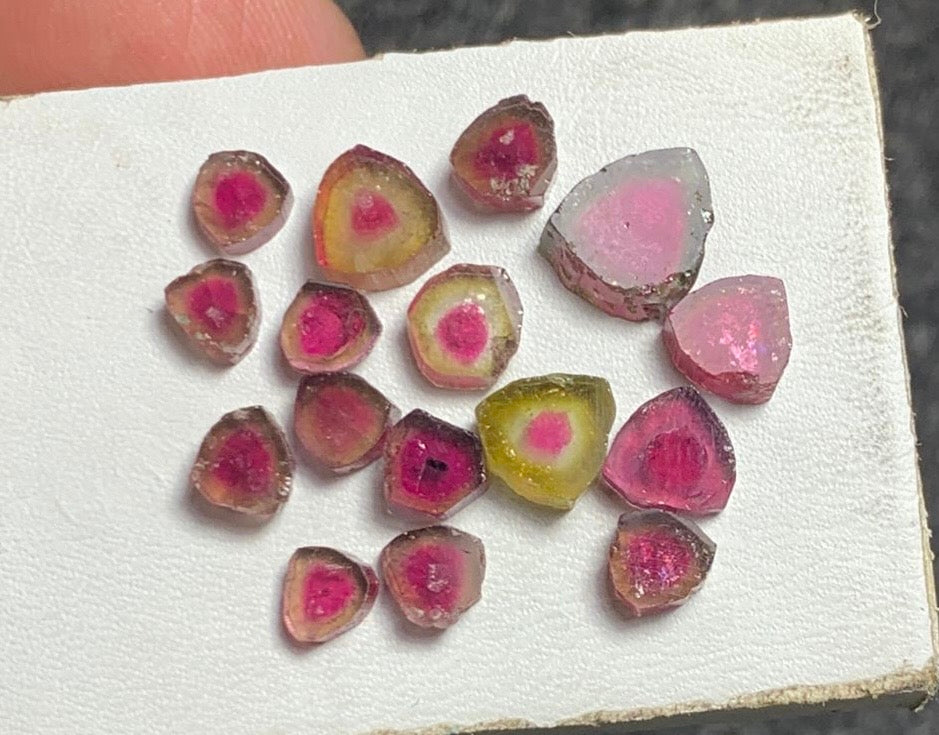
Raw Pink Tourmaline |
Delicate jewelry, healing kits, gift sets |
Love, creativity, emotional balance, joy |
|
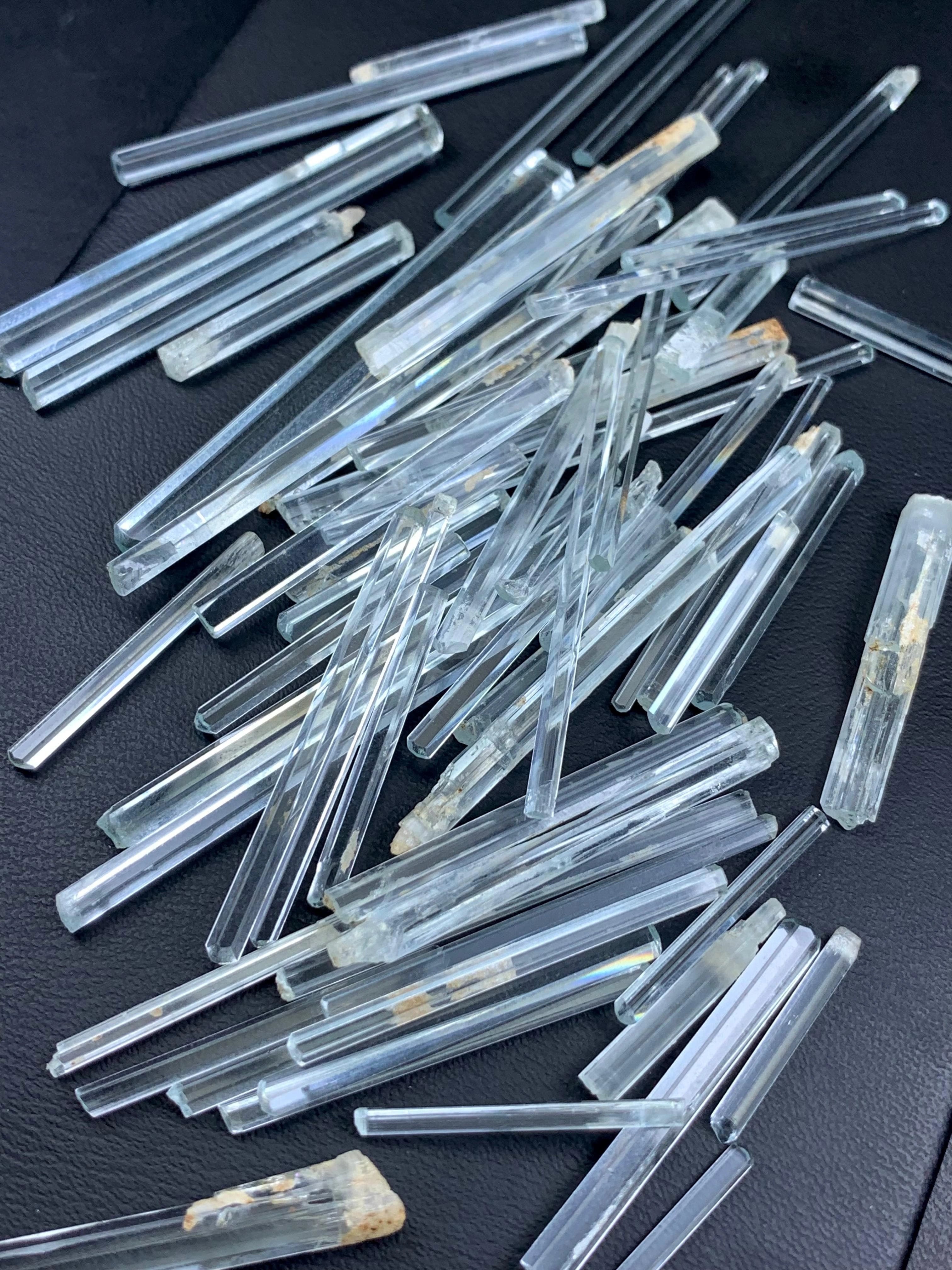
Rough Aquamarine |
Ocean-themed jewelry, meditation pieces, décor |
Calm, communication, clarity, courage |
|
Raw Green Tourmaline |
Nature-themed crafts, chakra sets, pendants |
Renewal, heart chakra, growth, abundance |
|
Rough Citrine |
Success-themed gifts, crystal kits, pendants |
Optimism, confidence, abundance, personal growth |

Understanding Natural Healing Crystals
Uses of natural crystals goes back to thousand years of cultures — from ancient Egyptians, Rome to traditional Chinese healing practices. They have been also popular among Ayurvedic traditions in South Asia.
In the modern world of today, the healers and people who are engaged in meditation about raw crystals, their main focus is on authenticity. They buy natural crystals only for Guinness. A raw amethyst pulled out of Brazil mountains will carry a story that mass- produced imitated or synthetic can not. This type of provenance matters a lot — not just energetically, but ethically. People focus on ethical sourcing of stones.
Here are common and popular raw healing crystals with their primary uses:
-
Amethyst — Amethyst is one of the most popular stone which is used for healing purposes a lot. It is used for meditation, anxiety relief, sleep support and spiritual clarity
-
Rose Quartz — Pink rose quartz is another popular choice of healers. It is believed that rose quartz is associated with self-care, love and emotional healing. This is used mostly in healing kits and gift sets
-
Black Tourmaline — Black tourmaline is one of the most magical crystal which is widely considered as to give strong protection against negative energy; kept near electronics or entrances
-
Clear Quartz — Clear quartz are one of the most abandoned stones on earth. They are found everywhere. They are considered an amplifier; used in crystal healing and meditation grids to strengthen surrounding stones
-
Citrine — yellow citrine is another variety of quartz and heated form of amethyst. This is also widely used in healing practices. This is believed to be linked to positivity; often placed in prosperity corners or carried daily
Create Better Crystal Gift Sets
Pair your rough crystals with polished tumbles and cabochons to create professional-looking healing kits and gift boxes that customers love.
Shop Tumbles & CabochonsHow to Tell If a Raw Crystal Is Real Before You Buy?
This is the most important and biggest concern about any crystal healer or craft makers. Buying raw crystals online need authenticity assurance. Synthetic stones, dyed glass and low quality stones is found everywhere and is flooding the market already. Here is how you can protect yourself:-
-
Check for natural inclusions. Rough stones must have inclusions and those inclusions itself must be in rough form. Every Real raw crystal has internal fractures, mineral traces, and colour variations. Perfectly uniform colour with no inclusions or well formed inclusions is a warning sign.
-
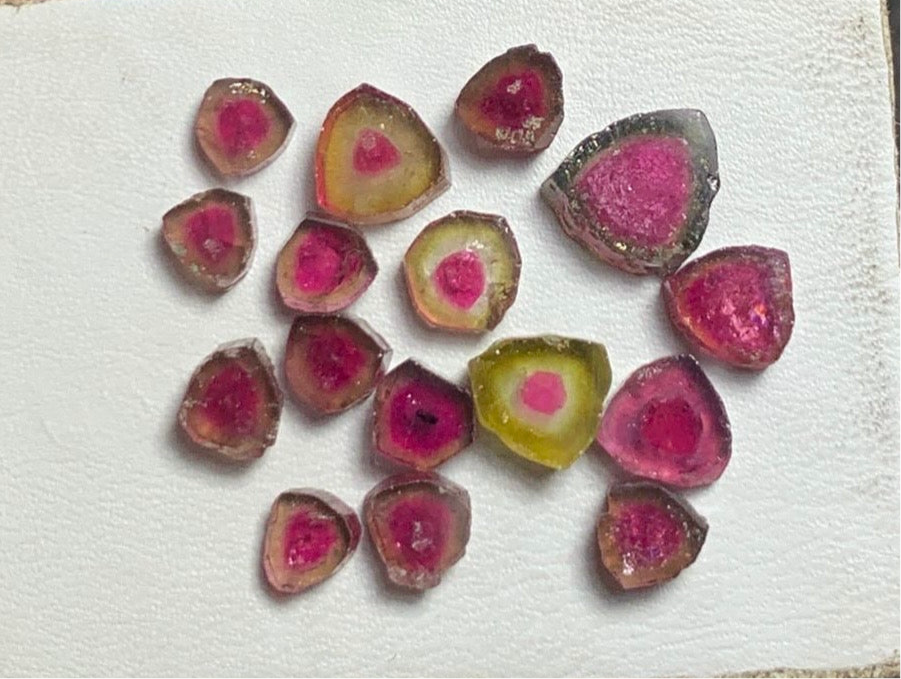
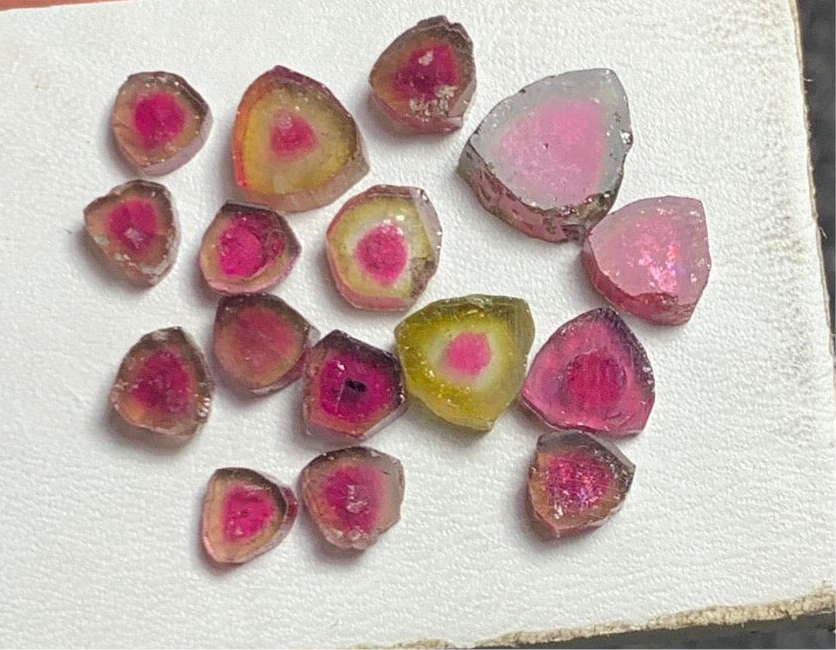
Ask about origin. A trustworthy seller will always disclose the cthe mine or region the stone came from. At Folkmarket, our stones are disclosed clearly about origin. Mostly of our stones are coming from Brazil, Africa, Sri Lanka, Burma, Pakistan, Thailand, Vietnam Taiwan etc. Such as tourmaline is coming primarily from Brazil, African, Gilgit-Baltistan and Kunar, mostly of our aquamarines from the Shiger mine of Skardu / Pakistan, and our amethysts from verified Brazil and African sources.
-
Weight matters. Real crystals feel dense. Glass and plastic are lighter in weight for their size. Always check the weight in grams before ordering.
-
Beware of 'too cheap'. Natural tourmaline crystals with perfect shape and quality at $1 per gram is suspicious. One must have understanding of approximate market rates which will help you in protecting you from synthetic substitutes sold as natural.
-
Look for real product photos. Every Folkmarket listing shows actual photos of the crystal parcel or stone you're ordering — not stock images. If a listing of any product only shows generic crystal photos, proceed with caution.
-
Check treatment disclosure. Not all crystals are natural in fully. Some crystals must need heat-treatment to enhance colour. Such as citrine is mostly heated form of amethyst. Though natural citrine also come. This is standard practice in the industry and not a negative sign— but a trustworthy crystal dealer should always disclose the kind of treatment.
Where to Buy Raw Crystals for Craft Making?
There are a lot of options worldwide for sourcing raw crystals — each with trade-offs depending on your volume, budget, and how important provenance is to you.
Online Crystal Dealers
Buying online raw stones is the most practical option for most craft makers. Search such stores that show actual photos of the stock along with providing full details such as weight, size, origins. Read their return policies before buying.
Folkmarket's raw crystals collection is designed for craft makers — with parcel deals starting from small 16-gram lots all the way to 300+ carat wholesale parcels for production jewelers.
Gem and Mineral Shows
This option is excellent for high-value purchases where you want to check the stone before buying. Shows are held internationally in many countries such as Tucson, Munich Shows, Bangkok Gems and Jewelry Show, Hongkong Show and many others. Gems shows also held locally whole-year inside the country. These show attract the collectors and wholesale suppliers.
Local Crystal and Craft Stores
This is good for for beginners who just want to start crafting. Useful for impulse purchases and for crafters just getting started. Local stone prices are usually high and availability is inconsistent. However one benefit is to see the stone personally.
Wholesale and Bulk Suppliers
For production craft makers, large handmade jewelry sellers, and crystal kit businesses, buying raw crystals in bulk parcels is the most cost-effective route. Folkmarket offers bulk deals on many stones such as tourmaline, aquamarine, amethyst, and quartz — all with origin documentation and consistent colour sorting.
10 Practical Tips for Buying Raw Crystals for Crafts
- Define your use first. Every craft has different requirements such as wire wrapping needs pointed or flat-face stones. Crystal grids need clusters or towers. Resin art needs smaller chips. Know your project design before you search.
- Order samples before bulk. In order to try a new supplier or a new crystal variety, start with a small parcel to assess quality before going towards a large order.
- Compare weight, not just price. In gemstones, weight of the stone matters a lot. Stones are sold per carat or per gram. So a 50-gram parcel at $40 would be a better value than a '10-piece lot' at $25 if those 10 pieces weigh only 8 grams total.
- Check return policies. Look for a crystal dealer return policy throughly before buying. A confident supplier stands behind their product. Folkmarket has published clear return and replacement policies if crystals arrive damaged or misrepresented.
- Look for colour-sorted parcels. For high production making, consistent colour is as important as quality. Look for suppliers who sort by crystals colour range, not just crystal type.
- Factor in shipping weight. Shipping cost matter a lot in international buying. Calculate shipping with weight correctly. For example, a 200-carat aquamarine parcel is only about 40 grams — but a large amethyst cluster can be 500g+. Check and calculate shipping costs before ordering large pieces.
- Read crystal-specific care notes. Some crystals (such as opals, ambers and selenite, malachite) are water-sensitive. If you're making crystal kits or selling to crystal healers. you should know crystal care requirements. This will help you provide better guidance to customers.
- Ask about origin transparency. A good dealer must disclose the origin transparency. Ask about origin of stones before buying.
- Start with versatile crystals. There are some crystals which have wide variety such as Amethyst, clear quartz, and rose quartz. They are the most universally loved — easy to use across multiple craft types and popular with healing crystal buyers.
- Keep an eye on the Folkmarket blog. We regularly publish guides on specific crystal types, craft techniques, and new arrivals from our sourcing trips.
Ethical Sourcing: Why It Matters for Raw Crystals
The crystal industry has faced real challenge about mining conditions. Child labour, environmental destruction and unsafe mining issues affect the global crystal supply chain.
At Folkmarket, we work directly with community-based miners — primarily in Africa, Brazil, Pakistan's Gilgit-Baltistan region and Afghanistan's Kunar and Nuristan provinces. These are generational crystal-mining communities where the knowledge and skills of mining is passed down through families. Our direct sourcing model means:
- Miners along with labours receive fair compensation, not cut-rate wholesale prices
- No child labour in our supply chain
- We can trace each crystal type back to its specific mining region
- Minimal environmental footprint — these are small, artisanal operations, not industrial mines
When you buy raw crystals from Folkmarket, you're supporting the people who actually extract these stones from the earth — not a series of middlemen who add cost and remove accountability.
Raw Crystal Craft Ideas to Get You Started
Are you not sure how to use these raw crystals into your handmade craft projects? Here are some more popular ideas of crystal craft making ideas to start with:-
- Crystal Healing Pendants: Crystal healing pendants are one of the most popular choice of raw crystals. They are capped with silver sterling or gold. For such projects, mostly points or polished pencil type crystals are used. Raw chunks are also used in crystal pendants.
- Wire-wrapped raw crystal jewelry— raw amethyst points and tourmaline crystals or emerald hexagonal crystals are ideal
- Crystal healing kits — This is made of 5–7 raw crystals with printed healing properties cards; popular as handmade gift set.
- Crystal grid sets — combine a central raw quartz point with tumbled stones at the grid nodes; pair with a printed sacred geometry grid card
- Macramé crystal wall hangings — raw crystals such as rose quartz, tourmaline, emeralds, aquamarine and amethyst clusters are knitted into macramé knot work without needing a setting
- Resin crystal jewelry — small raw crystal chips are set in UV resin make striking necklaces, rings, earrings, and keyrings
- Crystal point candle holders — some large citrine clusters or raw amethyst clusters or quartz points make natural votive holders; combine with soy wax for zero-waste gift sets

Handmade Crystal Pendants
If you're are looking for your favourite Crystal to wear or want to explore Folkmarket's handmade crystal pendant collection for inspiration.
Browse Our Pendant Collection →Frequently Asked Questions
Q: What is the difference between raw and polished crystals for craft making?
A: Raw crystals are unprocessed come with their natural shape and inclusions. Polished crystals have been faceted or tumbled.
Q: Are raw crystals safe to handle and use in jewelry?
A: Yes — most raw crystals are completely safe. A few exceptions: malachite dust is toxic if inhaled (don't sand or drill without protection), and some crystals with fibrous inclusions (like certain amphiboles) should be handled with care. Standard raw crystals like amethyst, quartz, tourmaline, and rose quartz are entirely safe for everyday handling and jewelry making.
Q: How much should I expect to pay for raw crystals for craft making?
A: Price varies significantly by crystal type, size, and quality. Rough citrine, serpentine, amethyst and clear quartz are among the most affordable — often $5–20 for a small parcel. Raw tourmaline and aquamarine are more valuable, typically $15–50+ per parcel depending on colour and weight. Folkmarket offers transparent per-gram and per-carat pricing so you can compare value accurately.
Q: Can I buy raw crystals in bulk for my handmade jewelry business?
A: Absolutely. Folkmarket offers wholesale crystal parcel deals for large products — from 80-carat tourmaline lots to 200+ carat aquamarine and amethyst parcels.
Q: Where does Folkmarket source its raw crystals from?
A: Primarily from Pakistan (Gilgit-Baltistan, Balochistan) and Afghanistan (Kunar, Nuristan provinces) — regions with some of the world's most exceptional tourmaline, aquamarine, and topaz deposits. We source directly from small-scale, community-based miners, which allows us to offer full origin transparency.
Q: Do raw crystals need to be cleansed before use in healing practices?
A: Yes many crystal healing practitioners clean stones before healing. Normally they are kept under sunlight or moonlight for several hours, using sound (singing bowls), smudging with sage, or burying briefly in the earth. It should be kept in notice that some crystals may fade in sunshine such as Kunzite or apatite.
Final Thoughts: Buying Raw Crystals the Right Way
Raw crystals are one of the most profitable material to work with. They can be used into various craft projects such as jewelry making, building healing grids, home decor or creating birthstone crystal gift for your loved ones. The key is to look cautiously before buying: assurance of authenticity, origins, honest weight data, and a genuine crystal dealer who can actually tell you where the stone came from. Safe buying is must for getting authentic stones.
At Folkmarket, raw crystals aren't an afterthought — they're at the heart of what we do. Our store exists specifically to connect handmade craft makers and healing practitioners with authentic natural crystals sourced directly from the mining communities that produce them.
Questions about a specific crystal or bulk order? Email us at info@folkmarket.com or browse the store — we're here to help you find exactly what your craft needs.
Read Related Articles
- How to Use Crystal to Make Handmade Crystal Jewelry?
- Raw Crystal Healing: Harnessing the Earth's Natural Energy
- Raw Crystals for Crafts & Healing
───────────────────────────────────────
Author:






0 comments